Platform — Radar
See it coming. Know what's true.Act with certainty.
An editorial early-warning system over the open web: follow any source, get a ranked daily digest that explains why you're seeing each item, and ask questions with cited answers.
Overview
Radar watches the open web the way a good editor watches a beat — not by dumping every headline on you, but by ranking what matters and telling you why. Follow any source by pasting a URL, open a daily digest grouped by reason, and ask questions that answer with citations back to the original article.
Feature
Paste a URL, get a source
Give Radar any page and it works out the right way to follow it: an RSS or Atom feed, a JSON feed, an article-list page it should scrape, or a single page to watch for changes. No feed hunting, no configuration.
Feature
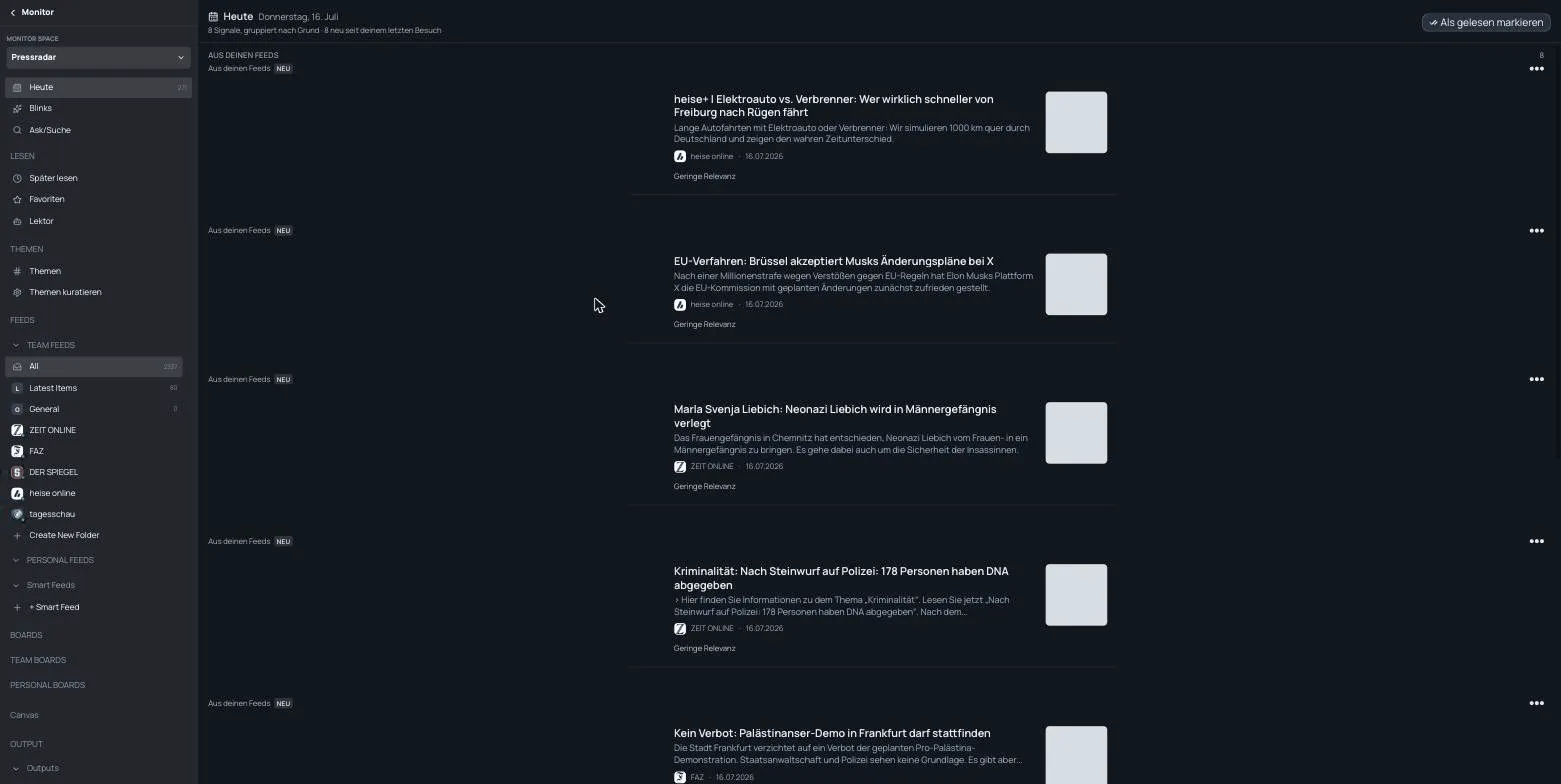
Today, not everything
The Today view is a ranked, capped digest grouped by the reason each item surfaced — so you read the ten things that matter before the hundred that don't. The full chronological firehose, All Signals, is one click away when you want it.
Feature
Topics with momentum
Radar detects topics across your sources and shows each with a momentum sparkline and the evidence behind it. One click deep takes you from "this is trending" to the articles that make it so.

Read the ten things that matter before the hundred that don't.
Feature
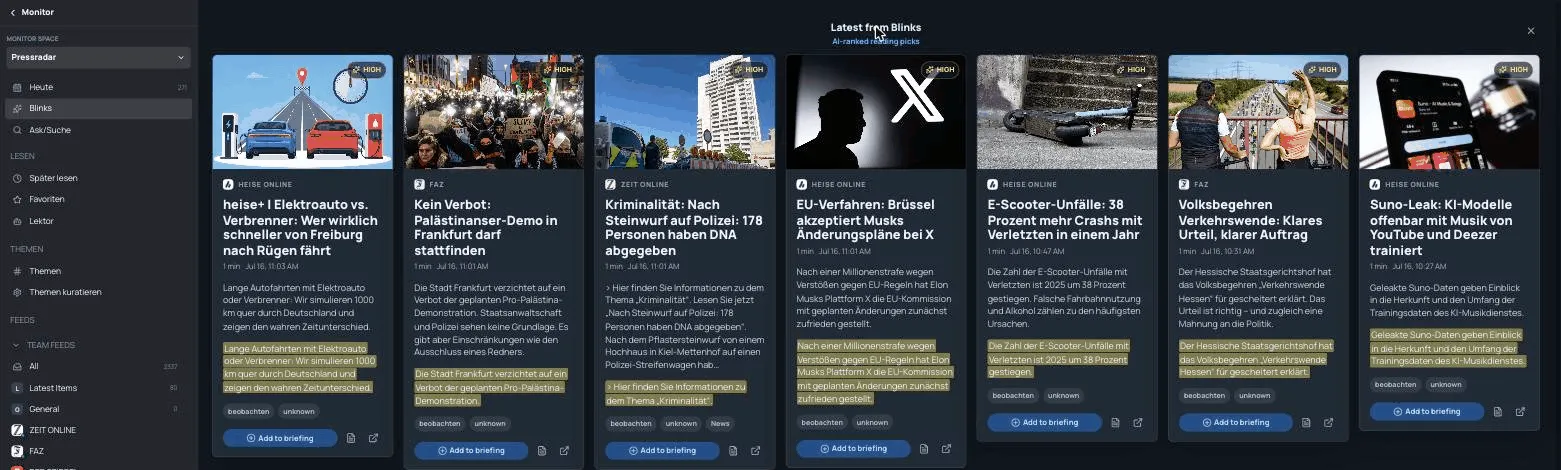
Blinks: your reading, picked
Blinks is an AI-ranked selection of the articles actually worth your minutes. Each pick shows its source and highlights the passage that makes it relevant — and joins a briefing in one tap. The grid you skim over coffee, not the queue you owe.
Feature
Follow the entity, not the keyword
Click any company, person or topic and Radar opens its profile: everything it believes about that entity, with the evidence chain behind it. And ranking knows the difference between an article that is about your competitor and one that merely mentions them.
Feature
Scouts search where feeds end
Not everything worth knowing publishes a feed. Scouts are discovery agents that sweep the open web for whatever you ask them to watch for — and deliver their findings into the same reviewable Inbox as everything else.
Feature
Early warning
Early accessBursty, growing or recurring patterns are flagged for human review before they harden into news — a chance to brief leadership a day early instead of reacting a day late.
Feature
Start from a pack
Early accessIndustry packs bundle the sources, topics and rules a sector actually needs — health care first — so a new team starts with a working radar on day one instead of an empty screen.
Feature
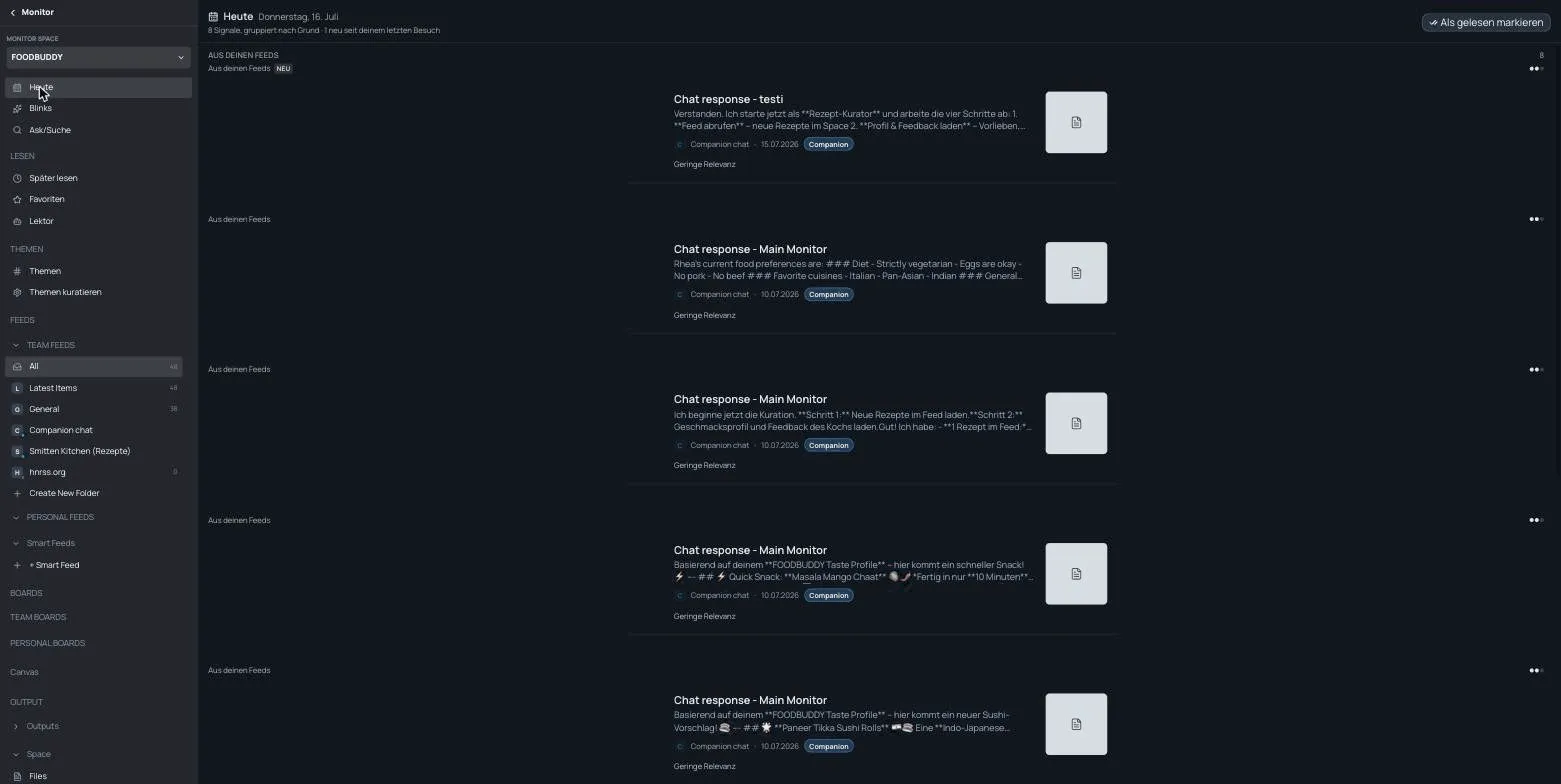
Lektor reads for you
Early accessLektor is a named AI screening colleague. Each morning it reads the new articles, marks what's relevant and quotes the passage that makes it relevant, and tells you what it skipped and why — so the screening is auditable, not a black box.
Feature
Collect, brief, share
Pin signals to personal or team boards, chat over any collection, and generate a briefing from what you've gathered. The board becomes the working surface where a story or decision takes shape.
Feature
Ask with citations
Ask conversational questions across everything you track — the whole corpus or a single article in the reader — and every claim comes back linked to its source. A since-last-visit summary catches you up on what changed while you were away.
Feature
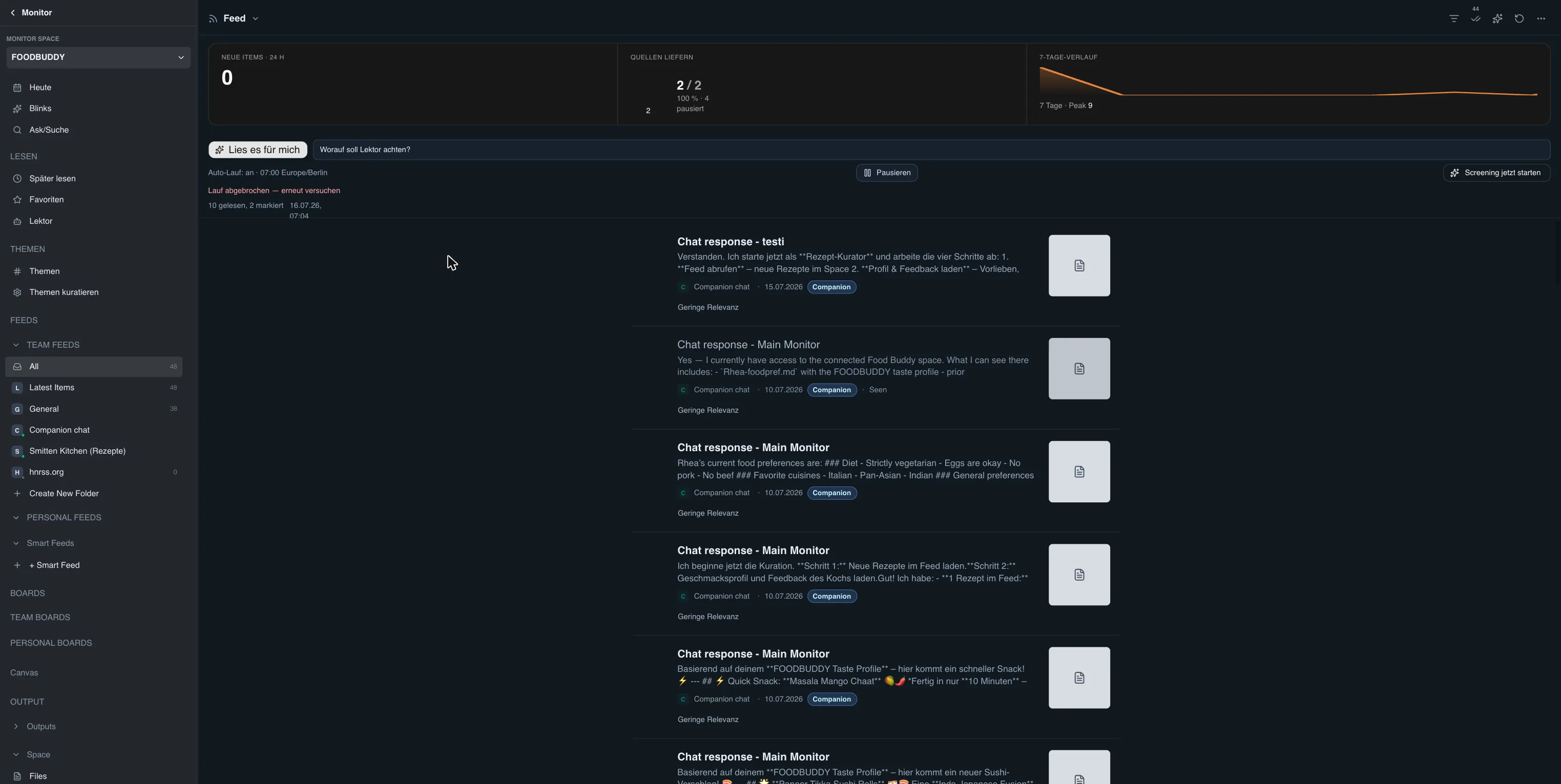
Know your sources' health
Early accessA source-health dashboard shows which feeds are fetching cleanly and which have gone quiet, so a dead source never silently becomes a blind spot. Saved-query Smart Feeds are in early access.
Feature
Triage as a team
Coming soonShared handling states — done, ignored, marked for a story — visible to the whole team with a full audit trail, kept separate from anyone's personal read state. No more forwarding articles to ask 'has someone taken this?'
Feature
One story, counted once
Coming soonSyndicated copies and near-duplicates are recognized as one story, with an 'also in N outlets' trail — so volume never masquerades as momentum.
Feature
Relevance that explains itself
Coming soonA deterministic relevance engine is coming to every feed: each ranking decision traceable to the entities, topics and rules that produced it — tuning instead of guessing.
How it works
How it works
Add a source
Paste a URL; Radar picks RSS, article-list, JSON or single-page-watch automatically.
Read Today
Open the ranked digest grouped by reason; drop into All Signals for the full stream.
Follow a topic
Click a topic's momentum sparkline through to its evidence.
Collect and ask
Pin signals to a board, generate a briefing, and ask cited questions across it all.
In practice
In practice
A communications lead opens Today before the editorial conference, sees a regulator's consultation ranked to the top with the reason attached, and walks in with a one-page brief that cites the source.
A market analyst pastes a competitor's newsroom URL, lets Radar watch the single page for changes, and gets an early-warning flag the morning a product announcement pattern starts building.
Early accessA public-affairs officer pins a week of signals to a team board, chats over the collection to test a thesis, and generates a briefing where every claim links back to coverage.
Questions
FAQ
Can Radar follow a site that has no RSS feed?
Yes. If there's no feed, it can scrape an article-list page or watch a single page for changes — you paste the URL and it chooses the method.
Won't a ranked digest hide things I need to see?
No — Today is the ranked view, but All Signals gives you the complete chronological firehose whenever you want it. Ranking is a lens, not a filter that deletes anything.
Is Lektor available now?
Lektor is in early access and not generally available yet — it's labeled "Early access" on this page. If it matters for your team, that's exactly the conversation to have in a demo.
Where do the answers come from?
Only from the sources you track. Every answer is grounded in those articles and cites them — Radar doesn't invent facts from outside your corpus.
Can two teams follow different things without stepping on each other?
Yes. Boards and feeds can be personal or team-scoped, so each team curates its own view over shared or separate sources.
Governance
Governed by design
EU hosting
Per-organization data isolation
Full audit trail
Review-gated knowledge
Works with any AI model
Next step